

Karla Monterroza-Watkins
On view through July 17, 2026
‘‘‘‘‘‘‘‘‘‘‘‘‘‘‘‘‘‘‘‘‘‘‘‘‘‘‘‘‘‘‘‘‘‘‘‘‘‘‘‘‘‘‘‘‘‘‘‘‘‘‘‘‘‘‘‘‘‘‘‘‘‘‘‘‘‘‘‘‘‘‘‘‘‘‘‘‘‘‘‘‘‘‘‘‘‘‘‘‘‘‘‘‘‘‘‘‘‘‘‘‘‘‘‘‘‘‘‘‘‘‘‘‘‘‘‘‘‘‘‘‘‘‘‘‘‘‘‘‘‘‘‘‘‘‘‘‘‘‘‘‘‘‘‘‘‘‘‘‘‘‘‘‘‘‘‘‘‘‘‘‘‘‘‘‘‘‘‘‘‘‘‘‘‘‘‘‘‘‘‘‘‘‘‘‘‘‘‘‘‘‘‘
Steven Zevitas Gallery is pleased to present scenes from the noise, a solo exhibition of sixteen paintings by Karla Monterroza-Watkins. The exhibition will be on view through July 17, 2026, with an opening reception on Friday, June 6, from 5:30 - 8 pm.
In scenes from the noise, Monterroza-Watkins presents a body of paintings that examine the emotional terrain of contemporary life. Through ambiguous figures, charged atmospheres, and psychologically resonant spaces, the artist explores themes of grief, alienation, belonging, and the persistent search for connection in an increasingly fractured world.
The figures that populate these paintings are neither portraits nor narrative protagonists. Instead, they function as vessels for states of longing, vulnerability, fatigue, and reflection. Positioned within sparse interiors and enigmatic landscapes, they occupy spaces that feel at once familiar and estranged. These paintings reflect a position of irresolution wherein social pillars have collapsed and ideological narratives no longer provide sufficient comfort. What remains is silence, uncertainty, and the lingering fog of unspoken feelings.
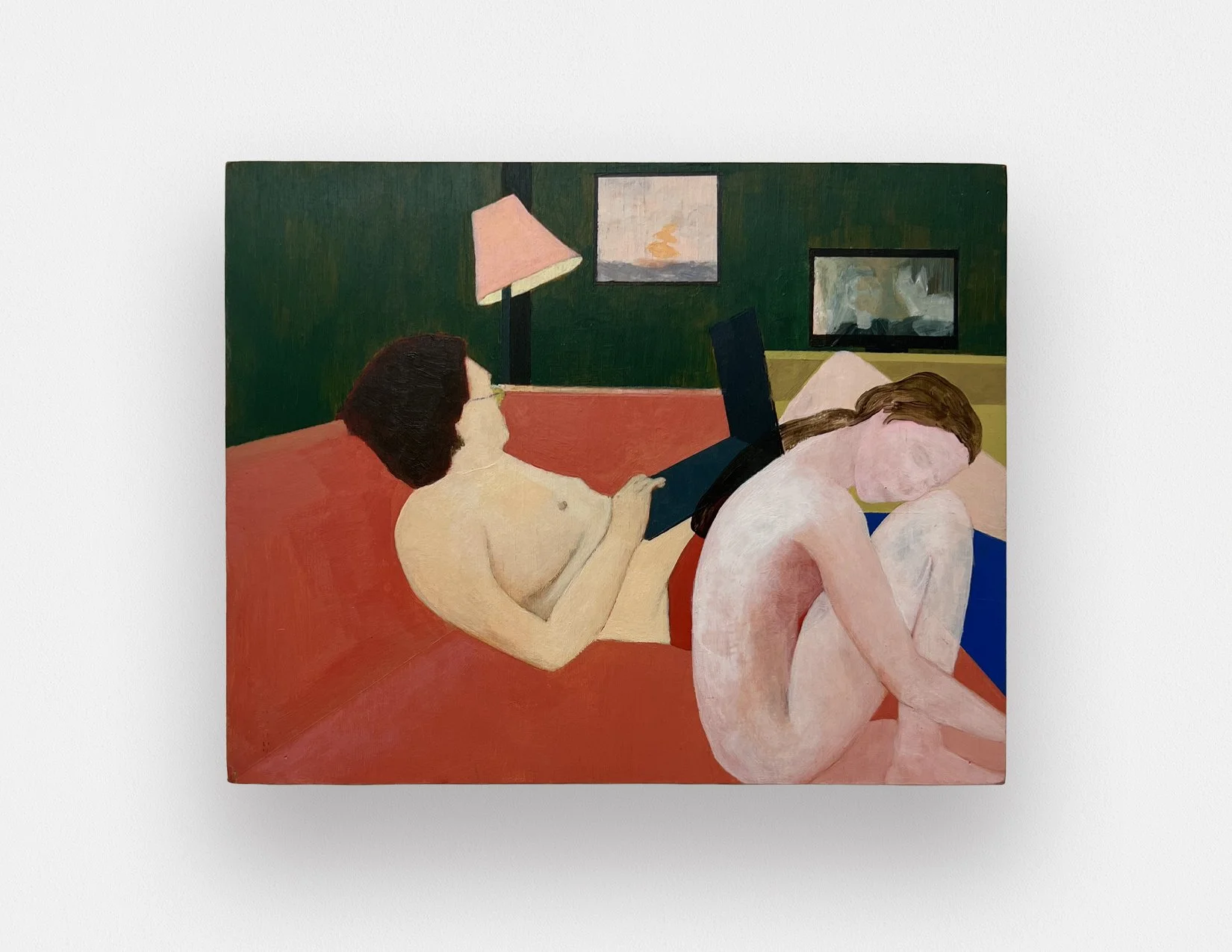
In Where Did Love Go?, a man and a woman sit nude on a couch in their home. The man’s hand hovers over the trackpad of his open laptop while his gaze mindlessly lingers at the television screen on the other side of the room. His partner crouches beside him. Her facial features are buried underneath washes of paint, while her body sits semi-translucent and scrubbed into the surface. Though both are vulnerable in their nudity, an intimate environment mutates into a site of apathy and isolation as the palpable weight of distance between them widens.
Within the exhibition, imagery from historical religious texts and ancient mythologies intermingle with contemporary settings and technologies. Installed in each corner of the exhibition, seven brown ochre security cameras are painted with the patina of a Dutch Master underpainting. A bright orange dot shines beneath every lens, signifying the cameras are active and continually surveying the scene. These contemporary tools of control bear witness to each tender moment.
Rather than assigning a moral doctrine, Monterroza-Watkins acts as witness to the soft core of a shared, human disquiet. She does not offer an antidote, but a companion silence in which an unspoken truth might finally resonate.