Anna Ortiz:
Nocturnos en Sayula
Opening reception: Friday April 3, 5:30 - 8 pm
On view through May 9, 2026
Steven Zevitas Gallery is pleased to present Nocturnos en Sayula, an exhibition of eight new paintings by New York–based artist Anna Ortiz. The exhibition will be on view from March 28 through May 9, 2026, with an opening reception on April 3 from 5:30–8 PM.
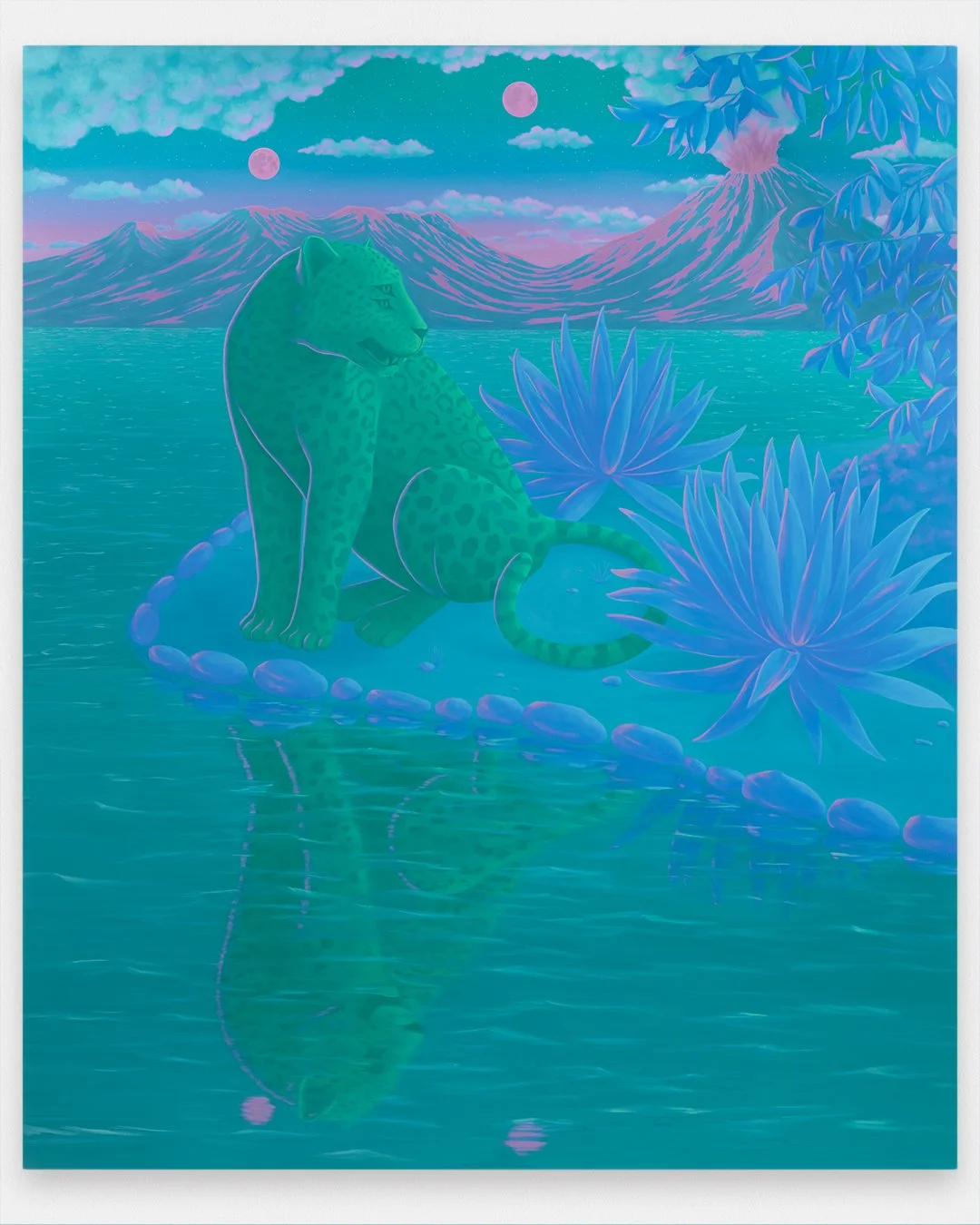
Situated between the sprawling metropolis of Guadalajara and the tranquil mountain town of Tapalpa, the saline flats of Sayula stretch outward in a vast, open expanse, framed by distant mountains and volcanoes. During the rainy season, water gathers across the basin, forming shallow pools that mirror the sky and surrounding landscape. These reflective surfaces transform the terrain into something otherworldly, creating fleeting portals where earth and sky converge into a single, luminous plane.
The paintings in Nocturnos en Sayula evoke this sense of quiet transcendence. With their smooth, lustrous surfaces and harmonious color palettes, the works feel suspended between reality and the surreal. While their atmosphere is unearthly, Ortiz anchors her compositions in the tangible world through depictions of regional landscapes, native fauna, and ancient relics.
Ortiz’s connection to these objects is deeply personal. Raised among ancient statues, beads, and obsidian arrowheads discovered by her parents while traveling on horseback through the Sayula basin to her grandfather’s cabin in Tapalpa, she developed an early relationship with these remnants of the past. Once buried beneath the earth, the artifacts gradually resurfaced through erosion, as though reclaimed and returned by the land itself. In her paintings, these relics reappear as guiding talismans that shape and direct her visual explorations.
Each work within Nocturnos en Sayula shifts between environments of lush wetlands and parched, fissured clay, echoing the region’s continual transformation. This cyclical rhythm resonates through Ortiz’s engagement with elemental forces: the boundless movement of air, the latent power of volcanic fire, and the enigmatic presence of water.
Through the motif of reflection, Ortiz explores the tension between perception and reality. Drawing on personal memory and material symbolism, she constructs a visual language in which opposites—past and present, material and ephemeral—coexist within a single, unified image.